
Mardi Gras may roll around once a year, but a good classic jambalaya recipe is a year-round staple in our house. This one comes from Jaime — born in Lafayette, Louisiana, food-science-degreed, and the owner of Mamalo's Cajun Kitchen in Frederick, Colorado. (She's also the woman who once flew 200 pounds of live crawfish in from Louisiana for a backyard boil, which tells you everything you need to know about her commitment to the real thing.) This is authentic Creole jambalaya the way Jaime's family makes it: chicken, andouille, the holy trinity of onion-celery-pepper, long-grain rice, and a slow, patient simmer that pulls every flavor together. As Jaime puts it: "Cajun food is love. It all takes time. You can't rush it."

Among her friends, Jaime is known as the Jambalaya Queen. So I spent a Saturday in the kitchen cooking up a classic version of jambalaya whilst drinking Cajun Bloody Mary’s with garlic olives.

She started off by seasoning chicken thighs (dark meat, my kinda girl!) with homemade cajun rub and tossing them in a heavy-bottomed pot heated with Healthy Harvest Greek Olive Oil just until browned, not cooked through, then removes them to a plate.
Read why Healthy Harvest Greek adds so much flavor to your meals
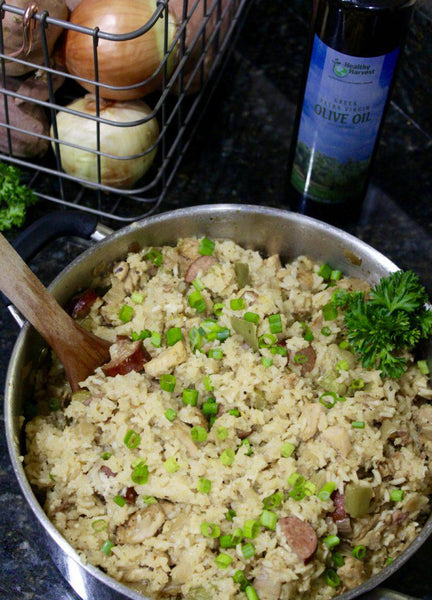
Then, she added onions, part of the cajun Holy Trinity – celery, onion, and bell peppers – to the pot. One of the first secrets she let me in on is to saute the onions nice and slow until they’re browned. It’s key to the traditional brown color and rich, deep flavor. “This is why cajun food is love. It all takes time. You can’t rush it,” she explains. You can add in a little stock to keep the onions from burning or sticking. While the onions are browning, she slices the chicken into fork-sized pieces.


After the onions are nice and browned, she adds in the bell peppers, celery and garlic, along with the chicken and sausage to cook. Once the meat is cooked through, she adds long grain white rice and tops with homemade stock.
She adds more seasoning to taste, covers the pot, and gives me this advice. “Once the lid is on, bring the pot to a boil, turn the heat to low, then DON’T TOUCH IT. If you have the heat too high, the rice will burn to the bottom, so turn it to low, and let it take all the time it needs, which is about 30-40 minutes. You don’t want to check on it, stir it, nothing, because the magic is in the steam. All the cooking power is gone if you open the lid.”
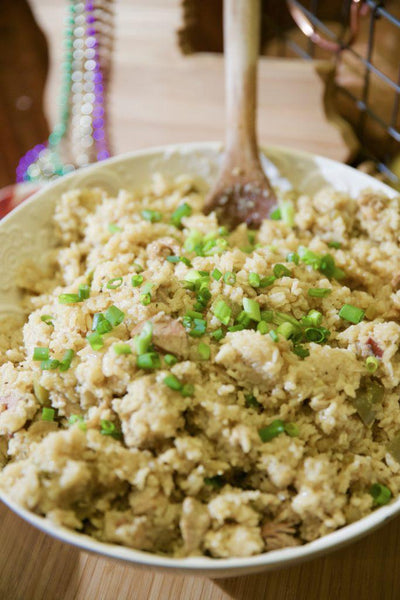

Once cooked, serve in heaping bowls, and toss with green onions. This recipe serves a crowd, so call up your friends and let the good times roll!
What Is Jambalaya?
Jambalaya is Louisiana's iconic one-pot rice dish — a cousin of Spanish paella and West African jollof, born from the cultural mash-up that defines Creole and Cajun cooking. Onions, celery, and bell pepper (the "holy trinity") form the base; protein and rice cook together in seasoned broth until everything is tender, smoky, and glossy with oil. There's no single "right" recipe — every Louisiana family has their own — but the rules are simple: brown your meat properly, build flavor slowly, and never lift the lid while the rice is cooking.
Creole vs. Cajun Jambalaya — What's the Difference?
The two styles diverge in one main place: tomatoes. Creole jambalaya (the New Orleans version) includes tomatoes, giving it a redder color and a slightly sweeter, brighter flavor. Cajun jambalaya (the rural Louisiana version) skips the tomatoes entirely, browning the meat hard so the rice picks up a deeper, smokier color from the fond. This recipe sits closer to Creole jambalaya but stays light on tomato — a Sunday-supper, all-occasion version that works whether you're cooking for Mardi Gras or a Wednesday in October.
Ingredients for Classic Jambalaya
- 3 medium white onions, diced
- 3 stalks celery, diced
- 1 bell pepper, diced
- 4-5 cloves garlic, minced
- 2 tbsp Healthy Harvest Greek extra virgin olive oil
- 4 chicken thighs
- 1 lb andouille sausage or Louisiana links
- 1.5 cup long grain white rice
- 3 cups chicken or veggie broth
- salt and pepper
- Cajun seasoning
- 2 tbsp garlic powder
- 2 tbsp onion powder
- 3 tbsp paprika
- 1 tbsp oregano
- 1 tbsp cayenne
- 2 tbsp salt
How to Make Classic Jambalaya
- Heat olive oil in heavy bottomed pot.
- Season chicken and add to pot. Cook until browned. Remove to a plate.
- Add onions to pot and cook over medium-low until browned. Don't rush!
- Once onions are browned, add garlic, peppers, and celery. Stir. Add in chicken and sausage and heat until cooked through.
- Add rice, stock, and season to taste.
- Add lid and bring to a boil. Once boiling, turn heat to low and cook for 30-40 minutes. Do not touch until you are ready to serve.
- Garnish with green onions.
What to Serve with Jambalaya
A bowl of jambalaya wants something simple alongside — nothing competitive. A green salad, crusty bread, or pickled okra all work. Start the meal with Jerusalem hummus and warm pita, or a plate of marinated olives and nuts while the jambalaya finishes its simmer. For dessert, anything cold and bright — no-churn mascarpone ice cream cleans the palate beautifully after all that smoke and spice.
FAQ
What is the original jambalaya?
The earliest jambalaya is generally traced to 18th-century Louisiana, where Spanish colonists tried to replicate paella with available ingredients (rice, local proteins, and the holy trinity instead of saffron and bell peppers). The dish evolved through African, French, and Caribbean influences into the two modern styles — Creole (with tomatoes, from New Orleans) and Cajun (without, from rural Louisiana).
What is the most important ingredient in jambalaya?
The "holy trinity" — onion, celery, and bell pepper — is the non-negotiable flavor base. After that, andouille sausage is what separates a real classic jambalaya recipe from a generic rice dish. The smoky, garlicky depth of true andouille is what makes the dish unmistakably Louisiana.
What are some common mistakes in jambalaya?
The biggest ones: lifting the lid while the rice cooks, using the wrong rice (anything but long-grain white), rushing the onion browning, and over-stirring after the rice goes in. A real authentic jambalaya recipe rewards patience — every "fast" shortcut costs you flavor or texture.